The hidden failure modes of complex transformation projects


Large organisations today have more delivery data than ever. Dashboards track milestones, burn-down charts show progress, and governance forums review risks on a regular cadence. From the surface, transformation appears measured and managed.
And yet, major programmes still drift. Work gets cancelled after months of effort. Critical people become invisible bottlenecks. Incident volumes quietly consume delivery capacity. Leaders often only recognise the scale of the problem once outcomes have already been compromised.
The issue is not a lack of oversight. It is a mismatch between what transformation leaders can see and how transformation systems actually behave.
The failure modes that don’t show up in status reporting
When you look at complex transformation environments as systems rather than collections of projects, a different set of patterns emerge.
1. Priority dilution
As more work is labelled “high priority,” prioritisation loses meaning. Teams cannot distinguish critical risk from routine urgency, and coordination becomes increasingly ineffective.
2. Avoidable work invalidation
Work is frequently cancelled or redone not because it was wrong in isolation, but because cross-team dependencies were not visible early enough. The cost appears as churn, not failure - but capacity is quietly lost.
3. Critical resource concentration
A disproportionate share of delivery dependencies converge on a small number of people or specialist roles. The organisation becomes structurally fragile, even if individual teams appear well staffed.
4. Incident loops
Escalations and unplanned work consume a growing share of delivery capacity. This reduces time for planned change, increasing the likelihood of further incidents and creating a self-reinforcing cycle.
These are not edge cases or isolated execution issues. They are system behaviours — patterns that emerge from how work, people and dependencies interact across the organisation.
Why they are so difficult to prevent
These failure modes persist because they sit outside the line of sight of most transformation oversight.
They are:
- System-wide: the relevant signals span teams, tools and domains. They do not live inside a single project plan or reporting structure.
- Relational: Risk emerges from interactions - between work items, systems and people - not from individual tasks viewed in isolation.
- Time-dependent: The most important signals lie in how relationships evolve over time. Snapshots show where the system is; they rarely show where it is heading.
Traditional mechanisms - standups, portfolio dashboards, periodic reviews, even external assessments - are designed to surface local issues and point-in-time status. They are far less effective at revealing structural dynamics that develop gradually across the delivery ecosystem.
The implication for leaders
If transformation risk is structural, then visibility must also be structural.
Leaders need to see not just progress against plans, but how the delivery system itself is behaving: where dependency pressure is building, where coordination is breaking down, and where capacity is being eroded by hidden dynamics.
This requires a shift:
- from local oversight to system awareness
- from status reporting to structural insight
- from snapshots to understanding change over time
- from reacting to escalations to intervening earlier in emerging risk
Without this, organisations can appear well governed while systemic fragility quietly increases beneath the surface.
Transformation failure is rarely sudden. It is usually the result of dynamics that were present for months but were not visible in the tools leaders relied on. Making those dynamics visible is less about better reporting — and more about understanding transformation as a system that evolves over time.

You might also like
Discover insights and tools for data analysis.

Why delivery optimisation is making transformation worse
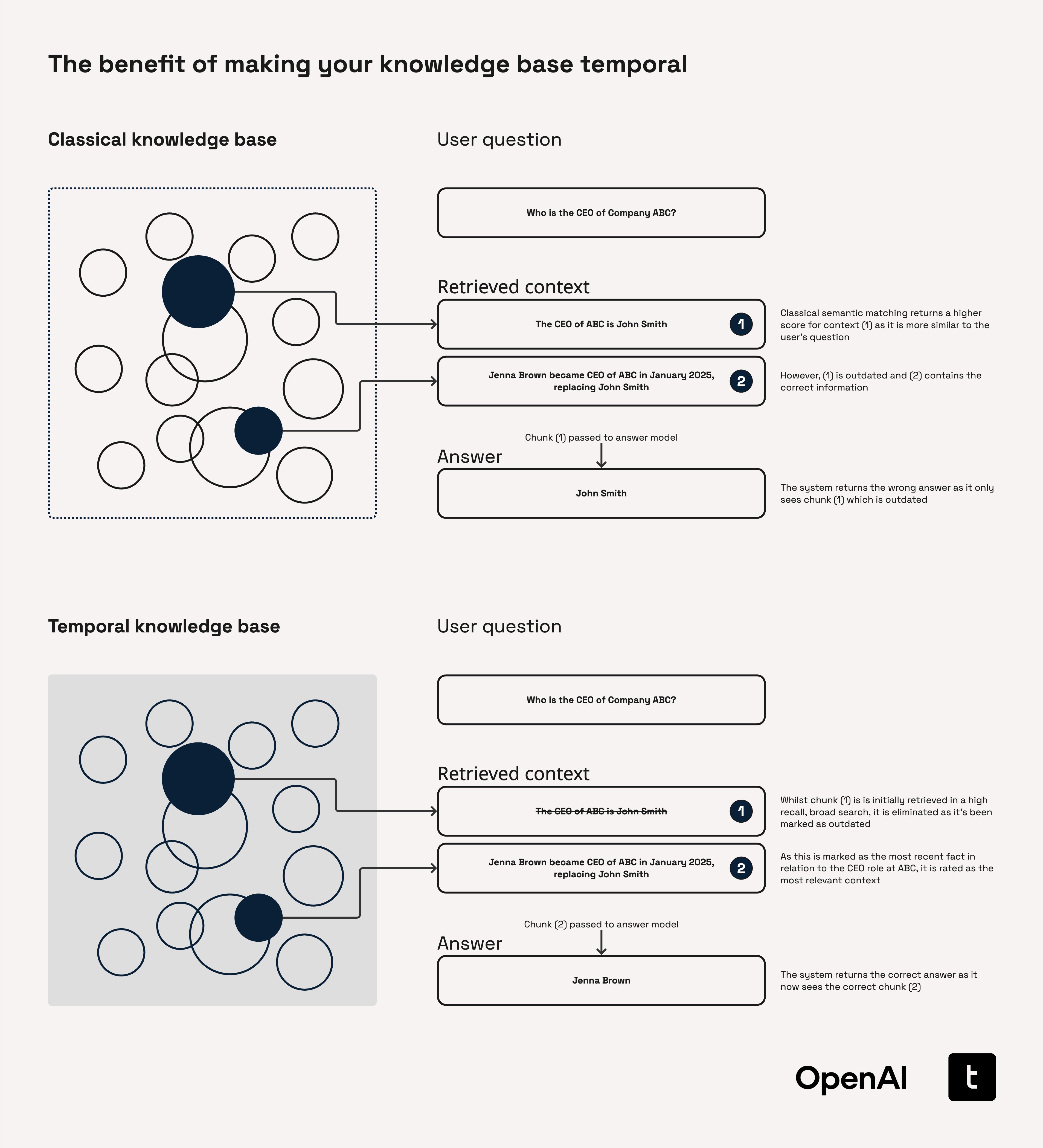
The Missing Link for AI Agents: Why a Native Temporal Graph is Non-Negotiable

Holistic Network Analysis Over Time
Unlock Your
Data's Potential
Discover how our tool transforms your data analysis with a personalized demo or consultation.